


On July 4, 1776, 56 men signed a document that made a promise none of them could keep alone. Their country has been trying to keep it ever since.
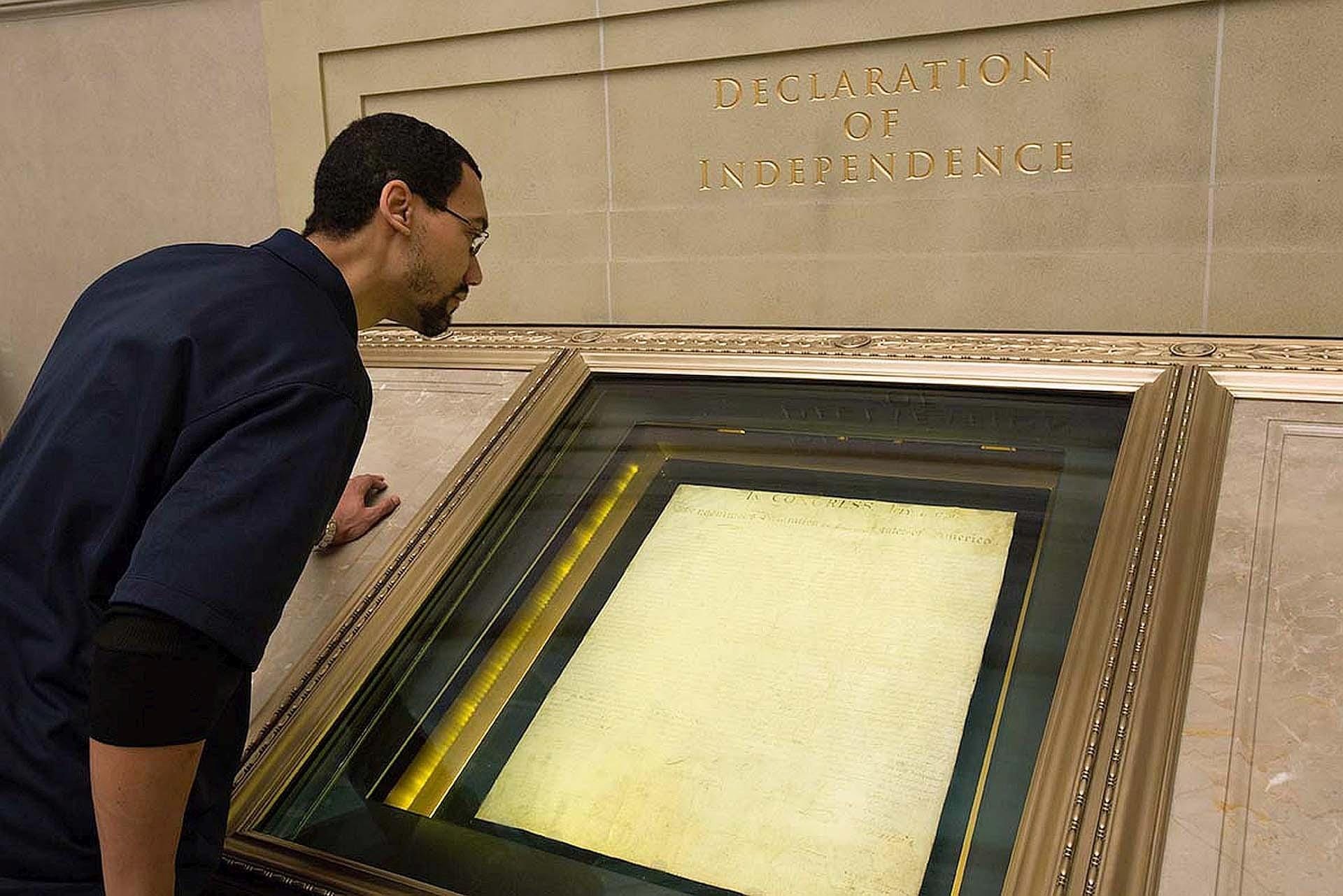
The Declaration of Independence didn’t describe America as it was. It described what America claimed it was striving to become: a nation where all people are created equal, where certain rights belong to every person simply because they exist, and where government has no legitimate authority except the power the people grant it. Two hundred fifty years later, that promise remains unfinished. This is an honest look at what has been paid toward it, what remains owed, and the role the Constitution has played as the imperfect tool a people has used to make good on words it wrote before it fully believed them.
A Promise Written Ahead of Its Time
Thomas Jefferson and the men who worked with him were not writing a legal code. They were writing an explanation, addressed to “a candid world,” for why 13 colonies were breaking away from their king. They could have confined their argument to specific grievances: taxation without representation, quartering soldiers and dissolving colonial assemblies. Instead, they began with a claim about every human being and the purpose of all government.
Rights are not granted by kings. They belong to people simply because they are people. Government exists to protect those rights, and it possesses legitimate authority only through the consent of the governed. When a government works against those ends, Jefferson wrote, the people have the right to alter or abolish it.
It is worth pausing to consider how bold that claim was—and how incomplete.
The men who signed the Declaration lived in a society built in large measure on slavery. Jefferson himself enslaved more than 600 people during his lifetime. The document’s declaration of equality stood beside a social order that denied it to many of the people living under it, including enslaved people, women, indentured servants and Native nations whose land was already being treated as the country’s next frontier.
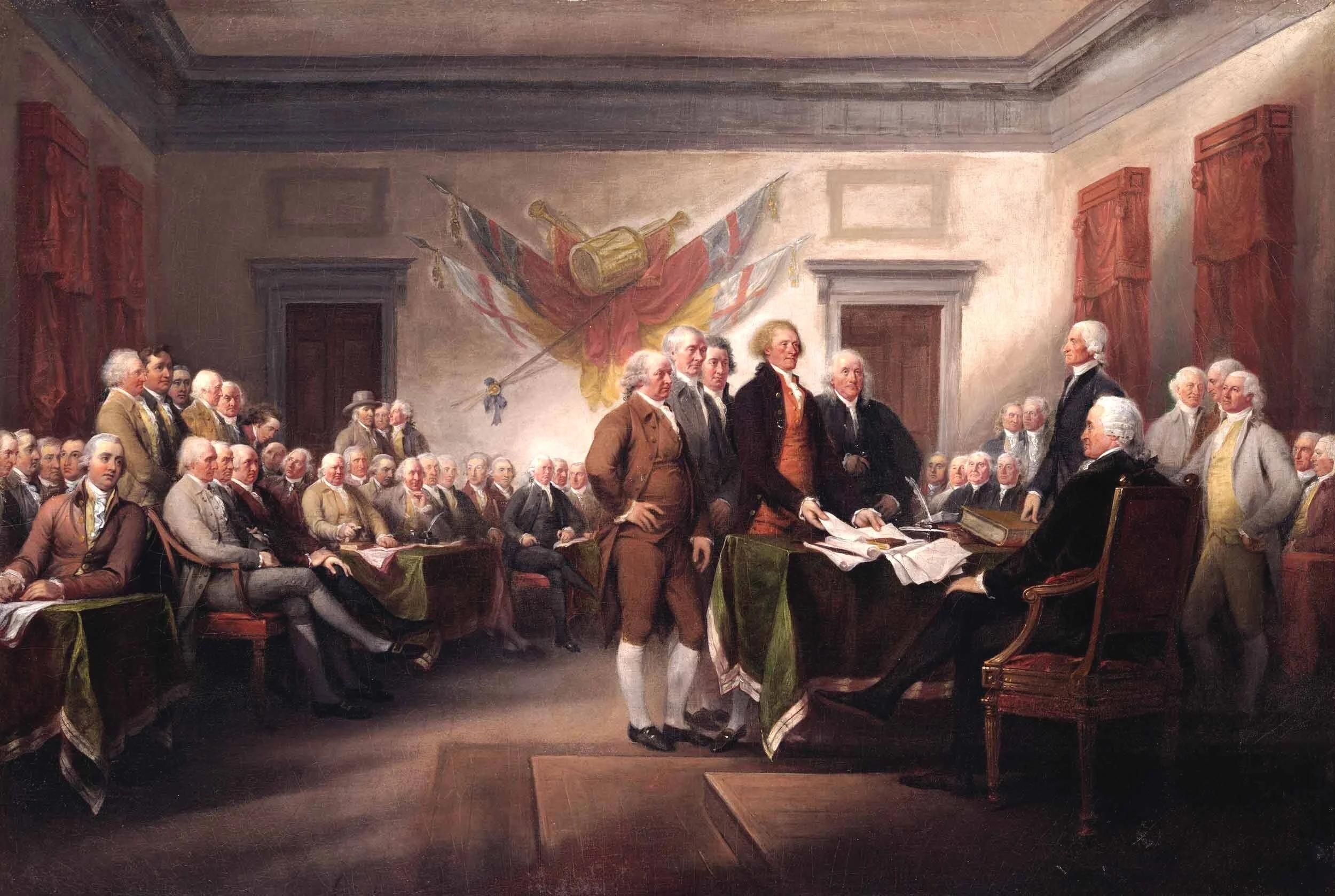
The Declaration was not a mirror reflecting America in 1776. It was a check written against an account that did not yet contain the funds to honor it.
That gap between promise and practice is not a flaw unique to the founding generation. It is the defining feature of American history. Any honest account of the past 250 years must hold two truths at the same time: The principle is real and worth defending, and the nation’s failure to live by it has brought devastating consequences to millions of people across generations.
Neither truth cancels out the other.
The Constitution as the Machine Behind the Promise
If the Declaration is the promise, the Constitution is the machine built to help keep it. Like any machine designed by imperfect people, it can break down, be repaired and, at times, even be run in reverse.
The Constitution, ratified in 1788, did not include the Declaration’s language of equality. Instead, it incorporated compromises that the Declaration’s own logic condemned: the Three-Fifths Clause, the Fugitive Slave Clause and a 20-year delay before Congress could prohibit the international slave trade. James Madison and the other framers knew they were creating a functioning government, complete with separated powers, checks and balances and a process for amendment. What they did not resolve was the question their own founding document had already raised: Who counted as fully equal under the law?
The Constitution’s greatest strength and its greatest tragedy lie in the same place: Article V.
The framers included a method for changing the Constitution because they understood that no generation could produce a perfect system for all time. The amendment process became the primary means through which the Declaration’s principles were slowly—and often reluctantly—written into American law.
The clearest example came after the American Civil War.
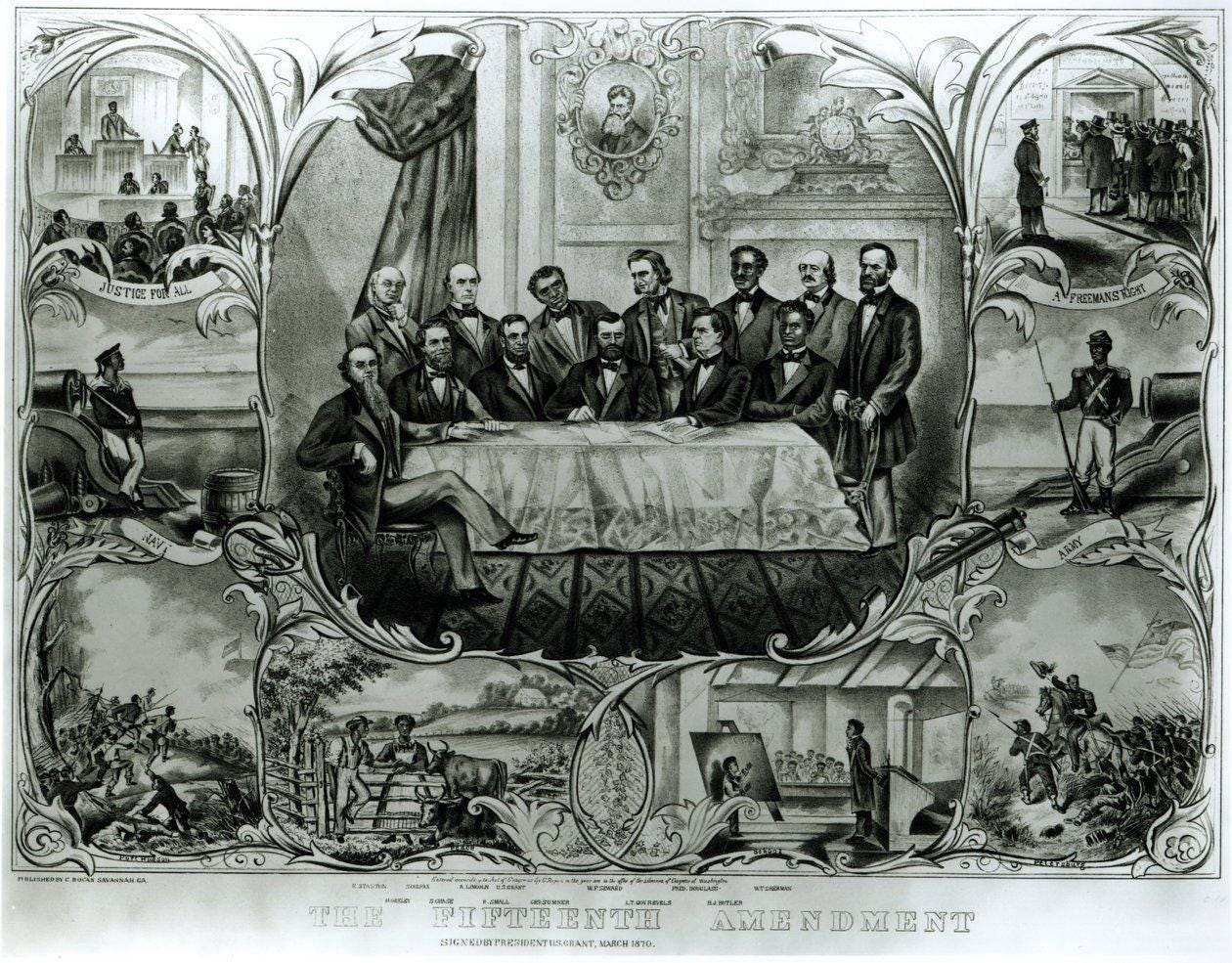
The Thirteenth Amendment abolished slavery. The Fourteenth Amendment established birthright citizenship and guaranteed equal protection under the law, extending constitutional protection to people the original document had left outside its practical reach. The Fifteenth Amendment prohibited denying the right to vote because of race, at least in law.
Together, these amendments marked the moment the Constitution attempted to catch up with the Declaration. Achieving them required a war that claimed more American lives than every other U.S. war combined.
Yet writing principles into the Constitution and enforcing them proved to be very different tasks.
The century separating Reconstruction from the modern civil rights movement demonstrates how wide that gap could become. Plessy v. Ferguson allowed the Fourteenth Amendment’s guarantee of equal protection to coexist with legally sanctioned segregation for nearly 60 years. It took another generation of activism, additional legislation and a Supreme Court willing to reverse itself in Brown v. Board of Education to begin closing that divide.
The Nineteenth Amendment guaranteed women the right to vote in 1920. Even then, many Black women throughout the South remained effectively disenfranchised until the Voting Rights Act of 1965. That law relied on Congress exercising its enforcement authority under the Fourteenth and Fifteenth amendments to give constitutional guarantees practical force.
A pattern emerges from this history.
The Declaration states the principle. The Constitution is eventually amended—or interpreted—to reflect it. Then comes the longest struggle of all: making those constitutional promises function in everyday life rather than exist only on paper.
Equality written into law and equality experienced in daily life are not the same thing. Confusing one for the other is how a nation convinces itself that a struggle has ended long before it actually has.

Where the Promise Has Been Kept
It would be its own kind of dishonesty to tell this story only as one of failure. Real progress has been made, won through extraordinary sacrifice by real people, and it deserves to be recognized without qualification.
The abolition of slavery, achieved at enormous cost, closed the starkest gap between the Declaration’s words and American practice. The expansion of voting rights — first to white men without property in the early 19th century, then, unevenly, to Black Americans, to women and, finally, through the Voting Rights Act of 1965, to Black Americans in practice as well as in law — brought the operation of American government closer to the Declaration’s claim that government derives its legitimacy from the consent of the governed, not merely the consent of some of them.
The labor movement likewise expanded the meaning of the pursuit of happiness beyond a formal legal right into something more attainable for working people who possessed neither the property nor the social standing of the nation’s founders. Those gains came at a cost that becomes easy to overlook once they are woven into everyday life.
Workers at the Homestead Strike in 1892 and the Pullman Strike in 1894 faced private security forces and federal troops for organizing against wage cuts and company control over their lives.
The Triangle Shirtwaist Factory fire killed 146 workers, most of them young immigrant women, after they were trapped behind doors that had been locked to prevent unauthorized breaks. Their deaths became a turning point in the argument that workplace safety was not merely a matter of private contract but of basic human dignity.


It took decades more of strikes and organizing before those ideas found lasting legal expression.
During the Flint Sit-Down Strike, workers simply refused to leave General Motors factories until the company recognized their union. The persistence of labor organizers helped produce the National Labor Relations Act, which protected workers’ right to organize, and the Fair Labor Standards Act of 1938, which established a federal minimum wage, limited child labor and created the 40-hour workweek.
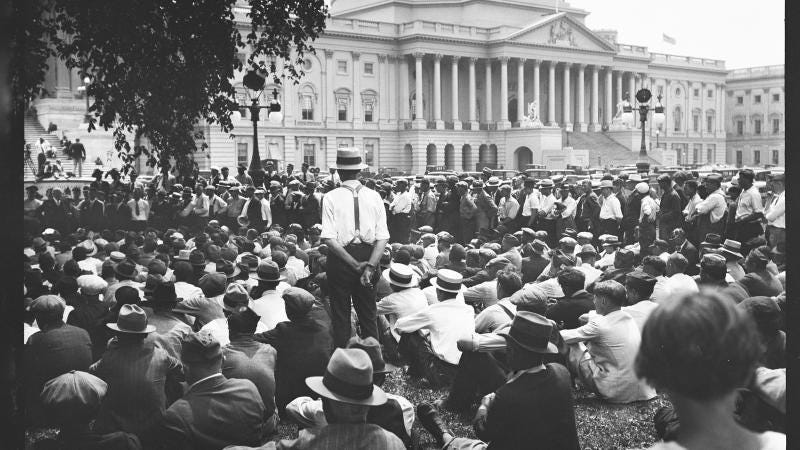
Social Security Act reflected the same underlying principle. It treated security in old age as something society should help guarantee rather than leave entirely to private charity or family fortune.
None of these protections appears explicitly in either the Declaration or the Constitution. Instead, they grow from the same underlying conviction expressed in the Declaration: that every person possesses an inherent dignity the law exists to protect rather than merely tolerate. Those principles were applied to an industrial economy the founders could scarcely have imagined.
The story did not end with the New Deal.
Cesar Chavez and Dolores Huerta organized farmworkers who had largely been excluded from many New Deal labor protections. Through the Delano grape strike and a nationwide boycott during the 1960s, they secured long-overdue recognition for some of the country’s least protected workers.
Their achievements also served as a reminder that even the labor movement’s own victories did not reach everyone equally. Progress, once again, arrived unevenly, requiring each generation to extend protections that previous generations had left incomplete.
Section 4 — Where the Promise Has Been Kept (Continued)
The civil rights movement of the 20th century accomplished what Reconstruction could not: It forced the Fourteenth Amendment to function as more than words on paper.
None of those gains came from government goodwill alone. They were won, case by case and campaign by campaign, by ordinary people willing to endure arrest, violence and even death to make the country live up to what it had written in 1776 and reaffirmed in 1868.
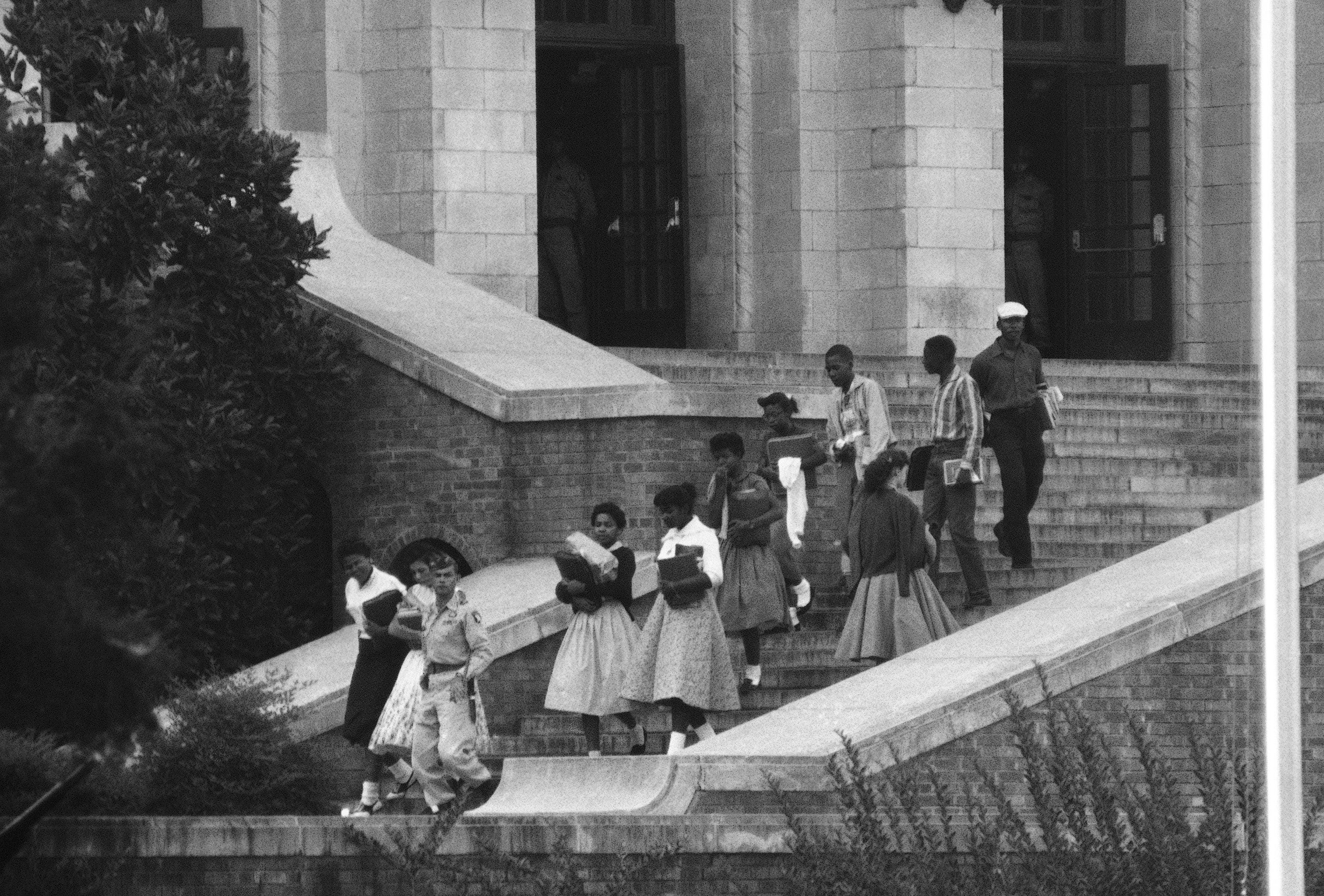
Brown v. Board of Education declared state-sponsored school segregation unconstitutional in 1954. Three years later, the decision still required enforcement by the 101st Airborne Division after President Dwight D. Eisenhower federalized the Arkansas National Guard and deployed federal troops to escort nine Black students into Little Rock Central High School through a hostile crowd encouraged by a governor determined to keep them out.
Rosa Parks’ arrest in Montgomery, Alabama, in 1955 was not a spontaneous moment of defiance. It was the carefully chosen test case of a local National Association for the Advancement of Colored People chapter that had spent years preparing for such an opportunity. The yearlong bus boycott that followed, sustained by thousands of Black residents who walked or organized carpools rather than ride segregated buses, demonstrated the power of disciplined collective sacrifice to overturn an unjust local law.
The movement continued to grow.
Four students sitting at a lunch counter in Greensboro in 1960 ignited sit-ins across the South. The Freedom Rides of 1961 exposed the violence used to preserve segregation as riders endured beatings and firebombings while testing federal desegregation orders. In Birmingham, Alabama, in 1963, children marching peacefully into police dogs and fire hoses transformed the nation’s own brutality into evidence against its claims of equality.
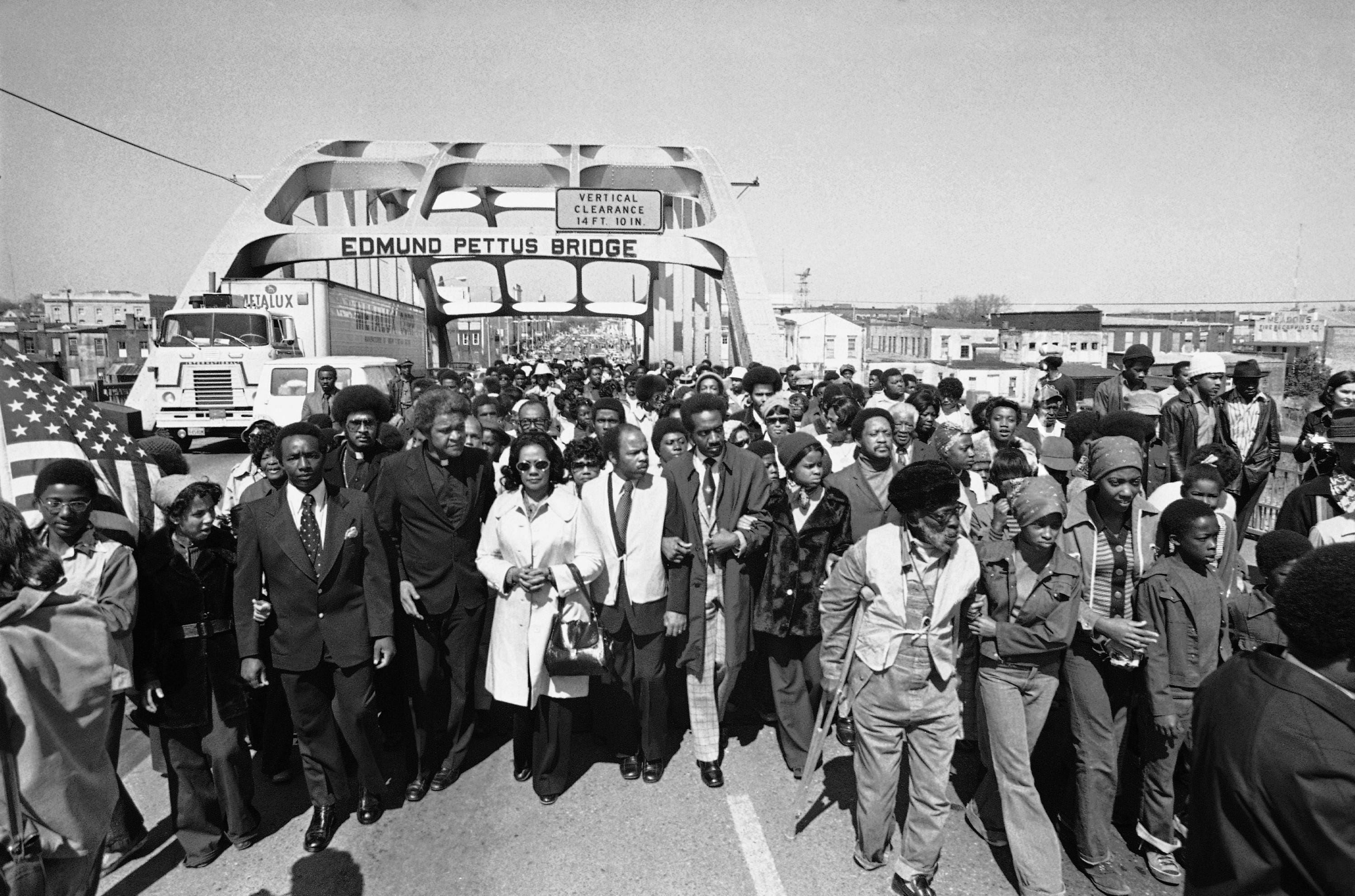
Among those who paid the price was John Lewis, who was beaten unconscious on the Edmund Pettus Bridge during the 1965 Selma voting rights march.
Fannie Lou Hamer, a Mississippi sharecropper, lost her job and was later beaten in jail after attempting to register to vote. Her testimony before the 1964 Democratic National Convention forced the nation to confront the cost of denying citizens the franchise.
Behind many of these public moments stood organizers whose names received less attention.
Bayard Rustin organized the 1963 March on Washington for Jobs and Freedom largely behind the scenes because many movement leaders feared his sexuality would become a political distraction. His experience illustrated that even a movement dedicated to expanding citizenship struggled to extend equal dignity within its own ranks.
The legislative achievements that followed were not gifts bestowed from above. They were the culmination of years of organized sacrifice.
The Civil Rights Act of 1964 prohibited discrimination in public accommodations, employment and federally funded programs. The Voting Rights Act of 1965 protected access to the ballot after generations of systematic exclusion. The Fair Housing Act, enacted during the week Martin Luther King Jr. was assassinated, extended the same principle to housing discrimination.
Each law answered sustained demands made by people willing to be arrested, beaten or killed to secure them.
That is what it took for constitutional guarantees adopted in 1868 to begin functioning as intended nearly a century later.
The same pattern continues into the present.
Disability rights under the Americans with Disabilities Act of 1990 and marriage equality under Obergefell v. Hodges continue the country’s ongoing argument over who is included within the Declaration’s promise that “all” are created equal.
None of these victories is beyond challenge. Each remains contested, incomplete and, at least in theory, subject to reversal. They should not be mistaken for the end of the story.
They are, however, genuine achievements. Like those that came before them, they resulted from people taking the Declaration’s principles seriously enough to insist that the Constitution—and the nation governed by it—move closer to fulfilling them.
Where the Promise Has Failed, and Where It’s Straining Now
The nation’s failures are not confined to the past. Some of its oldest wounds have never fully healed, and new strains have emerged on principles that seemed more settled only a generation ago.
The dispossession of Native nations remains among the country’s deepest and most enduring failures because it was not incidental to American expansion; it was one of its central mechanisms.
Treaty after treaty was negotiated and then broken, not as isolated exceptions but as a recurring pattern of federal policy. The Declaration itself reflects that contradiction. Among its grievances against the British crown is the accusation that the king had encouraged “merciless Indian Savages” to wage war against the colonists, language revealing how little the document’s authors extended their own philosophy of natural rights to the Native peoples whose lands they were already claiming.
This was not a contradiction that emerged later. It was present from the beginning.
Its consequences — measured in land, sovereignty, culture and generations of loss — remain visible today.
The second great failure is the era of Jim Crow, not simply because segregation existed but because it endured for nearly a century after the Constitution had already been amended to prohibit racial inequality under the law.
For decades, the Fourteenth and Fifteenth amendments remained part of the Constitution while many state governments constructed elaborate legal systems designed to circumvent them. Literacy tests, poll taxes, grandfather clauses and state-sanctioned segregation transformed constitutional guarantees into promises honored only selectively.
That history demonstrates an uncomfortable truth.
Amending the Constitution is necessary, but it is never sufficient.
Rights secured on paper remain vulnerable unless successive generations insist upon enforcing them. Otherwise, constitutional amendments risk becoming monuments to ideals rather than living protections under law.
That lesson remains relevant.
Even during this anniversary year, there are visible pressures on constitutional principles that many Americans considered largely settled not long ago.
The Supreme Court’s narrowing of protections under the Voting Rights Act, combined with another wave of mid-decade redistricting by legislatures controlled by both major political parties, has renewed debates over whether electoral systems adequately reflect the Declaration’s principle that government derives its authority from the consent of the governed rather than from electoral maps drawn to predetermine outcomes.
Questions about due process have likewise reemerged.
Reports alleging that federal immigration officers entered homes without judicial warrants, together with judicial findings that some agencies failed to comply with court orders, have renewed debate over constitutional protections against unlawful searches, seizures and deprivations of liberty.
These controversies are not merely historical echoes.
They involve constitutional questions currently being argued in federal courts, state legislatures and public debate. Their eventual resolution will help determine whether the nation’s long effort to bring constitutional practice closer to the Declaration’s principles continues to advance or begins to retreat.
The larger pattern remains consistent across American history.
The Declaration established ideals that far exceeded the country’s willingness or ability to fulfill them immediately. The Constitution provided mechanisms for moving closer to those ideals. But every generation has faced the same choice: whether to strengthen those principles through law and practice or allow them to weaken through neglect.
The promise has never been self-executing.
It has always depended upon citizens willing to insist that the nation’s governing institutions honor their own founding commitments.
A Consent Not Extended: The Wars Abroad
There is a version of American history that tells the story of the past 250 years as a steady expansion of the principle of consent of the governed to more and more people within the nation’s borders. That account is true as far as it goes. But it leaves out a parallel history just as long: the United States has often denied that same principle to people beyond its borders when military power and national interest came into conflict.
The Declaration of Independence did not argue that consent of the governed applied only to Americans. It presented the principle as universal. Yet American foreign policy has frequently treated it as a privilege reserved for Americans rather than a right belonging to all people.
That pattern began at home, long before the United States projected power overseas.
The wars against Native nations, the Long Walk of the Navajo, the Sand Creek Massacre and the violence culminating at the Wounded Knee Massacre were not simply isolated conflicts over land. They were military campaigns intended to eliminate the political independence of nations the United States had, in many cases, already recognized through treaties.
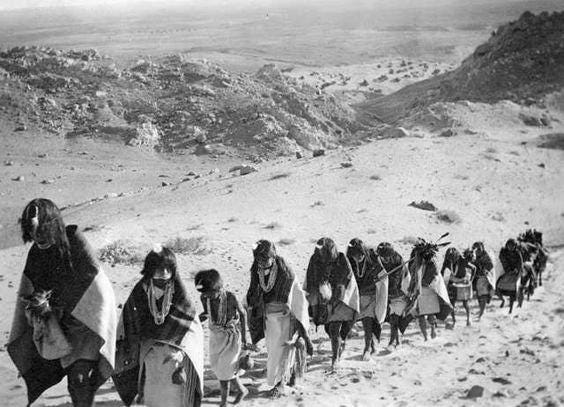
A nation founded on opposition to taxation without representation spent much of the following century using the U.S. Army to ensure that Native nations would exercise no meaningful sovereignty over lands the federal government claimed for itself.
That contradiction was not incidental to westward expansion.
It was central to it.
The same logic eventually extended beyond the continent.
The Mexican-American War transferred roughly half of Mexico’s territory—including land that would become California, Nevada, Utah and much of the modern Southwest—to the United States without the consent of the people who lived there.
Years later, Ulysses S. Grant, who had served as a young Army officer during the war, described it in his memoirs as one of the most unjust wars ever waged by a stronger nation against a weaker one.
The residents of those territories became citizens of a country that had spent seven decades proclaiming that governments derive their legitimacy from the consent of the governed. They themselves were never asked whether they consented to the transfer.
Perhaps the clearest illustration came in the Philippines.
The United States entered the Spanish-American War partly in the name of Cuban independence. President William McKinley initially suggested that the Philippines would likewise be liberated rather than annexed.
Filipino revolutionaries who had already been fighting Spain believed the United States would recognize their newly established government.
Instead, the United States annexed the islands and fought the Philippine-American War to suppress the same independence movement it had appeared to support.
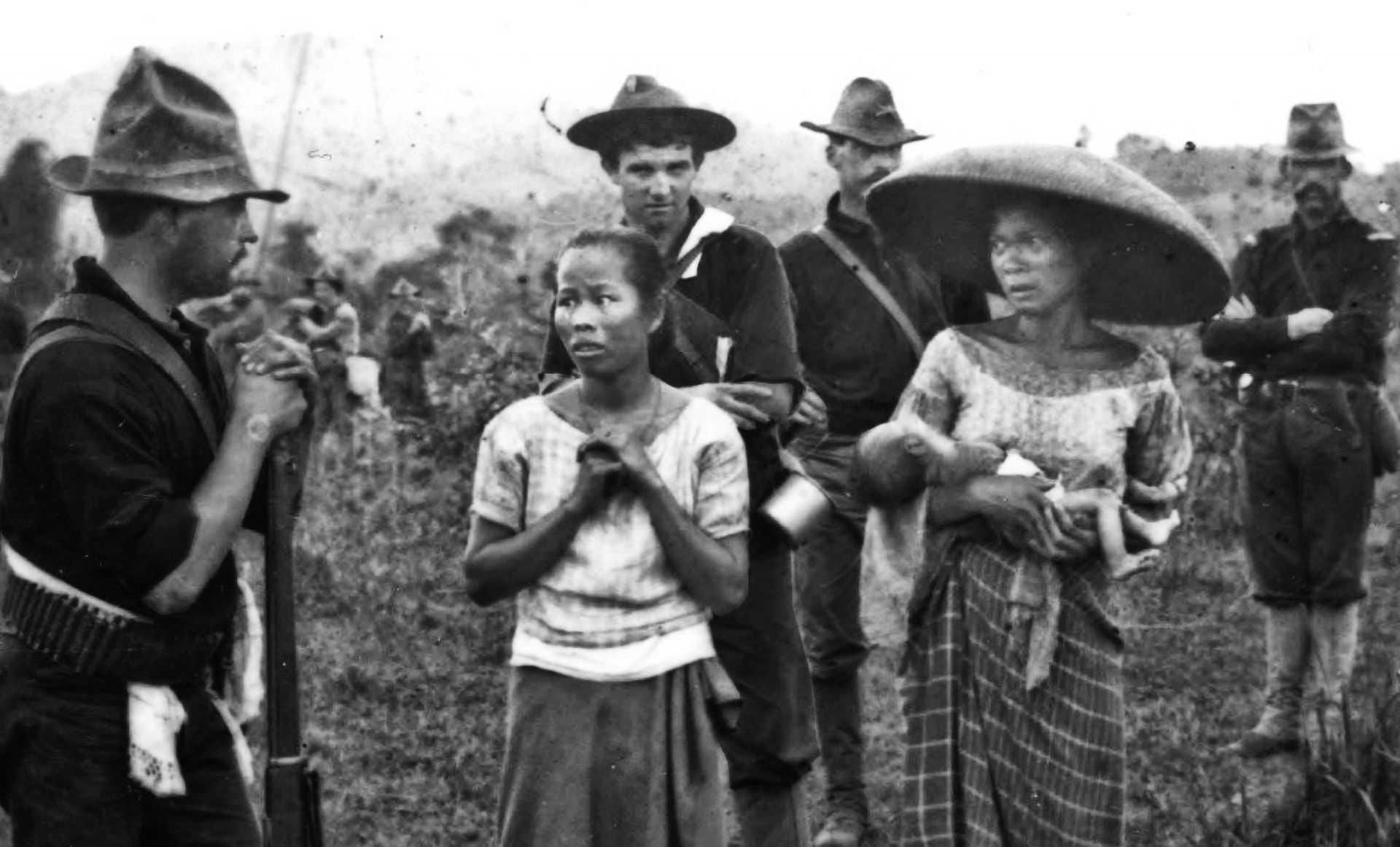
McKinley described the policy as “benevolent assimilation.”
For many Filipinos, it meant something very different.
Tens of thousands died during a conflict fought to deny them the same principle of self-government that Americans had invoked against the British Crown more than a century earlier.
The irony is difficult to ignore.
Jefferson’s language about the people’s right to alter or abolish a government that ruled without their consent became the philosophical foundation of American independence. Yet that same principle was denied to another people by an American government exercising authority from thousands of miles away.
The contradiction does not erase the importance of the Declaration’s ideals.
It illustrates how difficult nations—including the United States—have found it to apply those ideals consistently when doing so conflicts with strategic, territorial or political interests.
The question raised by the Declaration was never simply whether Americans deserved self-government.
It was whether all people did.
The nation’s history abroad suggests that answering “yes” has often proved easier in principle than in practice.
The pattern continued through the 20th century even as the locations and circumstances changed.
American interventions throughout Central America and the Caribbean reflected the same tension between the nation’s stated ideals and its strategic interests. The prolonged occupation of Haiti, repeated military interventions in Nicaragua and support for governments that protected American economic interests regardless of their domestic legitimacy all raised the same fundamental question: How universal was the principle of consent of the governed?
In Vietnam, that question became even more difficult.
The United States supported the government of South Vietnam, despite its persistent struggles to establish broad political legitimacy among its own people. The conflict itself grew in part from the collapse of French colonial rule following World War II, a colonial order the United States had initially helped restore despite its own longstanding commitment to national self-determination.
The result was a war in which Americans often described themselves as defending freedom while many Vietnamese experienced the conflict as another struggle over who would govern their country.
The 2003 invasion of Iraq raised similar questions in a different era.
The United States removed an authoritarian government without the consent of the Iraqi people and without broad international support. Although the dictatorship of Saddam Hussein was widely condemned, the occupation that followed demonstrated a recurring political reality: Governments imposed by outside powers struggle to acquire legitimacy because consent cannot simply be transferred by military force.
A constitution may be written.
Elections may be organized.
Institutions may be constructed.
None of those guarantees creates the public trust that legitimate self-government requires.
None of this means every American war has been fought in bad faith or that the United States has never defended the principle of self-determination abroad.
The Allied victory in World War II remains one of history’s clearest examples of military force used to defeat regimes fundamentally opposed to democracy and national self-government.
Yet even that achievement existed alongside profound contradictions at home.
While American soldiers fought fascism overseas, the federal government incarcerated more than 100,000 Japanese Americans without due process during the war. The nation defended liberty abroad while denying constitutional protections to many of its own citizens.
That contradiction mirrors a recurring pattern throughout American history.
The issue is not whether the United States has sometimes fought for liberty overseas.
Clearly, it has.
The issue is whether the nation has applied its founding principles consistently when those principles conflicted with military, economic or geopolitical objectives.
The historical record suggests that it has not.
Too often, the right of self-government has been treated as universal in theory but conditional in practice.
If the Declaration’s claim that “all” are created equal is to be taken seriously, then the people affected by American military power cannot be excluded from that moral calculation simply because they lived beyond the nation’s borders.
A country that measures itself by universal principles cannot evaluate those principles only within its own boundaries.
The same standard that judges how America treats its own citizens must also inform how it exercises power beyond them.
Only then can the nation’s commitment to consent of the governed become something more than a principle applied selectively when it proves politically convenient.
What the Constitution Cannot Do
The Constitution can secure rights.
It cannot compel virtue.
It can restrain government from abusing power. It cannot require citizens to love one another, care for their neighbors or exercise mercy. It can establish a framework for justice, but it cannot create the moral character necessary to sustain a just society.
This is where a distributist perspective—and, more broadly, a religious one—offers something a purely civic account cannot.
Writers such as G. K. Chesterton and Hilaire Belloc argued that political liberty alone is insufficient if economic and social power remain concentrated in the hands of distant institutions. A society may distribute legal rights while leaving people dependent on governments or corporations for the necessities of daily life.
The Declaration promises life, liberty and the pursuit of happiness.
It does not promise that anyone will help another person pursue those ends.
No constitution can legislate generosity.
No statute can require compassion.
No court can order genuine charity.
That is not a criticism of the Constitution so much as an acknowledgment of its limits.
The nation’s founding documents establish a floor beneath which government should not allow people to fall. They cannot build the roof of a shared moral life.
That has always depended on something beyond law.
Whether one calls it charity, mutual aid, civic responsibility or caritas, it consists of people freely choosing to recognize the dignity of others rather than merely respecting their legal rights.
A community of tiny homes helping people returning from incarceration, a coalition of churches operating food pantries or shelters, volunteers accompanying immigrants through legal proceedings, neighbors caring for elderly residents who would otherwise be alone—none of these efforts substitutes for constitutional government.
They complement it.
They accomplish work the Constitution was never designed to perform.
The Constitution protects liberty.
Communities decide what to do with it.
Turning the Tide
Recognizing the nation’s current challenges is only useful if it leads to practical action.
An essay that merely diagnoses problems without considering possible responses risks becoming an exercise in pessimism.
Several of the pressures discussed earlier remain within the reach of ordinary citizens.
Voting rights offer one example.
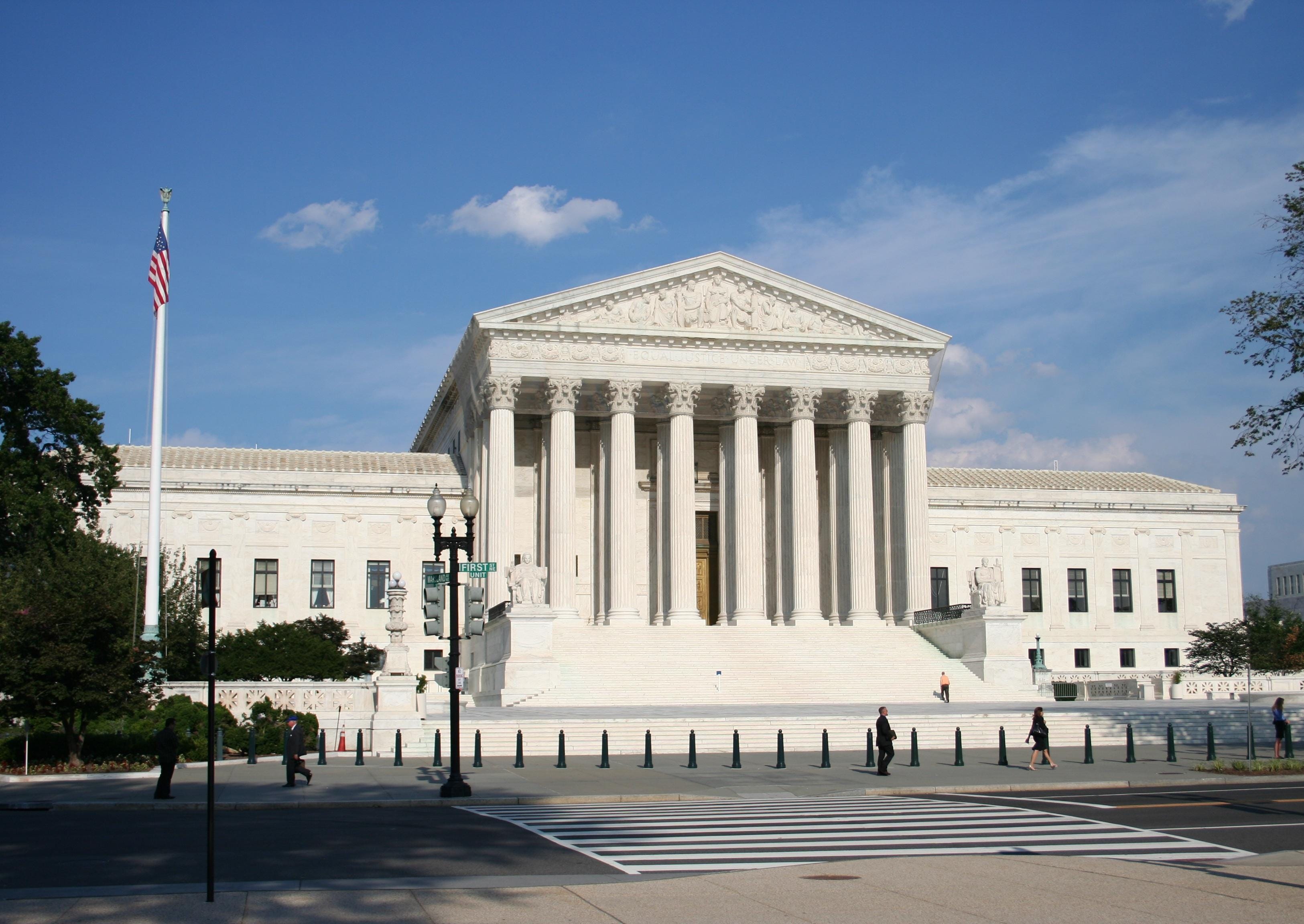
The Supreme Court’s decisions limiting portions of the Voting Rights Act have shifted much of the work of protecting fair elections back to states and local communities. Independent redistricting commissions, already adopted in several states through ballot initiatives, provide one way to reduce partisan control over electoral maps.
x
Local voter registration efforts remain equally important.
Many of the gains achieved during the civil rights movement began not in Washington but through years of patient organizing in neighborhoods, churches and community centers.
The lesson of 1965 is often misunderstood.
Congress did not create the movement.
The movement created the political conditions that made congressional action possible.
The same relationship between local organizing and national reform is likely to remain true in the future.
Due process presents another opportunity for civic engagement.
Legal observers who monitor immigration proceedings, volunteers who organize “know your rights” workshops and citizens who participate in court-watch programs all contribute to making constitutional protections more than abstract guarantees.
Support for public defenders and legal aid organizations has likewise become increasingly important.
Rights that exist only on paper cease to function as rights in practice.
The Fourth and Fifth amendments have never enforced themselves.
They have depended upon judges willing to apply them, attorneys prepared to defend them and citizens determined to insist that government remain accountable to them.
The final challenge is less legislative than cultural.
It concerns the relationship between patriotism and religious faith.
A Christianity that measures its faithfulness primarily by loyalty to a nation rather than by concern for the stranger, the prisoner and the hungry risks confusing the symbols of faith with its substance.
The standard set by Jesus in the Gospel of Matthew is not national allegiance.
It is service to those in need.
The measure is whether the hungry are fed, the stranger welcomed and the imprisoned visited.
The earliest Christians understood this distinction well.
Their refusal to offer incense to Caesar reflected the conviction that no earthly government could claim the ultimate loyalty owed to God alone.
The answer is not to remove faith from public life.
Doing so would ignore the moral traditions that inspired abolitionists, civil rights leaders and countless advocates for justice throughout American history.
The challenge instead is to practice the substance of faith rather than its symbolism.
Visiting someone in prison matters more than merely debating criminal justice.
Welcoming an immigrant matters more than treating immigration solely as an abstract political issue.
Feeding a hungry neighbor matters more than arguing over who deserves assistance.
A person spending a Saturday morning mentoring someone recently released from prison or accompanying a family through immigration court performs an act that no flag displayed in a sanctuary can accomplish.
Such actions rarely become headlines.
Yet they have often outlasted political victories because they depend neither on election results nor on which party controls government.
They depend only upon individuals choosing to treat one another with the dignity the Declaration claims belongs to every person.
That possibility has existed in every generation.
It remains available today.
What 250 Years Suggests
Taken as a whole, the American story is neither the triumphal narrative often presented at official commemorations nor the account of unrelieved betrayal offered by its harshest critics.
It is something more complicated.
The Declaration of Independence wrote a check the nation could not immediately cash. The Constitution created—however imperfectly—a mechanism for honoring more of that obligation over time through amendment, legislation, judicial interpretation and the sustained efforts of citizens determined to make the nation’s founding principles more than aspirations.
Some of that debt has been paid.
The abolition of slavery, the expansion of voting rights, the dismantling of legal segregation and the extension of civil and labor protections to people the founders never imagined as full participants in American civic life represent genuine progress. They are not symbolic achievements. They changed the lives of millions of people and brought the country closer to its stated ideals.
Yet a debt that has been only partly repaid remains a debt.
The nation’s 250th anniversary is therefore an appropriate moment to ask not whether America has fulfilled its promise but whether it continues to move toward it.
Recent developments suggest that the answer remains unsettled.
Protections for voting rights that required generations of activism and the sacrifice of countless Americans have been narrowed by judicial decisions and challenged through legislative changes at the state level. Constitutional guarantees of due process, rooted in many of the same grievances Jefferson identified against the British Crown, continue to face new tests as courts examine the limits of executive authority and law enforcement power.
These are not abstract constitutional debates.
They concern the practical meaning of rights that have shaped American political life since 1776.
The struggle has not ended.
It has merely taken new forms.
Perhaps the most honest conclusion on the 250th anniversary of the Declaration of Independence is neither that America has fully succeeded nor that it has irrevocably failed.
Rather, America remains under construction.
Every generation inherits both the unfinished blueprint and the responsibility to continue the work.
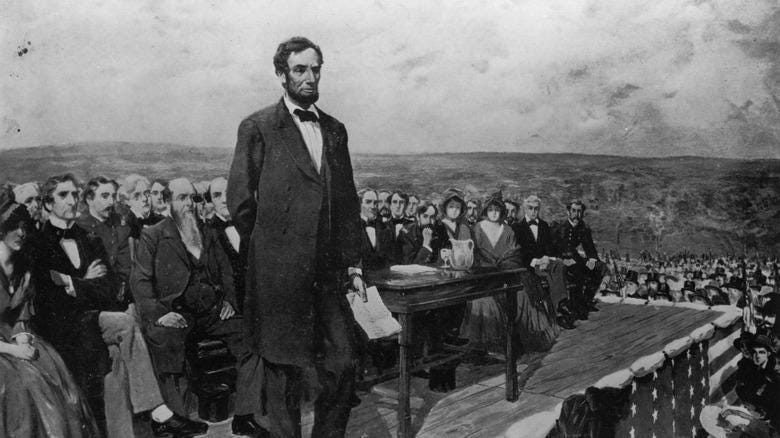
Abraham Lincoln understood this during the Gettysburg Address. He did not describe the Declaration as a document commemorating a completed nation. Instead, he treated it as a proposition to which the nation remained dedicated—a proposition that required continual testing to determine whether a government founded on liberty and equality could endure.
That test did not end with the Civil War.
It did not end with Reconstruction.
It did not end with Brown v. Board of Education.
It did not end with the Voting Rights Act.
It continues today in courtrooms interpreting the Fourteenth Amendment, in legislatures debating election laws and in communities deciding how they will treat immigrants, formerly incarcerated people, those experiencing homelessness and others whose dignity is often easiest to overlook.
The signers of 1776 could not have imagined many of the causes their words would eventually be invoked to defend.
They did not foresee the abolition of slavery.
They did not foresee disability rights.
They did not foresee interracial marriage becoming constitutionally protected, much less marriage equality.
Their language proved larger than their own understanding of it.
That may be the Declaration’s greatest strength.
Its principles were never permanently owned by the generation that wrote them.
Each generation has inherited them, interpreted them and sought to extend them further than those who came before.
The work has proceeded through constitutional amendments, legislation, court decisions, social movements and countless acts of individual courage and compassion.
It has also advanced through quieter acts that history rarely records: neighbors helping neighbors, communities caring for those left behind and citizens insisting that the country’s highest ideals apply not only to themselves but to everyone.
The American experiment has always depended upon both kinds of work.
The Constitution provides the framework.
The people determine whether it lives.
The wall remains unfinished.
No generation was ever expected to complete it alone.
The enduring question, at this anniversary and every one that follows, is not whether the work is finished but whether each generation is willing to lay its own stones before passing the task to those who come next.
Michael Beard is a contributing writer at Unorthodoxing.
